🇹🇷 Türkiye · Kurutulmuş Gül Yaprakları · Dried Rose Petals
Dried Rose Petals Exporter to Turkey — for İstanbul, Ankara, İzmir, Bursa, Gaziantep & the Turkish Lokum, Baklava, Kolonya & Hammam Markets
Pakistan's bulk supplier of food-grade Rosa damascena dried rose petals to Turkish lokum manufacturers (Hacı Bekir, Koska, Şekerci Cafer Erol), baklava houses (Karaköy Güllüoğlu, Hafız Mustafa, Gaziantep cluster), Eyüp Sabri Tuncer kolonya production, Turkish hammam supply programs, and traditional cosmetic manufacturers. HALAL certified, TSE-compatible, HACCP, ISO 22000. FOB Karachi → Mersin in 12–15 days. MOQ 100 kg. Free samples to Turkish addresses.
⚡ Direct Answer · TL;DR
Kohenoor International (Hyderabad, Pakistan) exports food-grade Rosa damascena dried rose petals to Turkish B2B buyers — lokum manufacturers (Hacı Bekir, Koska), baklava houses (Karaköy Güllüoğlu, Gaziantep cluster), kolonya producers (Eyüp Sabri Tuncer), and hammam supply distributors. FOB Karachi → CIF Mersin in 12-15 days via Suez. USD 6.20-9.50/kg by tier. HACCP, ISO 22000, HALAL, TSE-compatible documentation. Free 50-100g samples to Istanbul / Ankara. Pakistan-Turkey PTA preferential treatment available. Contact: WhatsApp +92 310 4929292 · export@kohenoorint.com
Turkey · Dried Rose Petals at a Glance
| Product | Rosa damascena food-grade A1 petals · Şam Gülü / Kurutulmuş Gül Yaprakları |
| Origin | Hyderabad, Sindh, Pakistan |
| Destination Ports | Mersin (MIP, primary) · Istanbul Ambarlı (Marport) · Izmir (Aliağa) · Iskenderun · Air: IST / SAW / ADB |
| Sea Transit (Suez) | 12–15 days Karachi → Mersin · 14–17 days Karachi → Istanbul |
| Air Transit | 2–3 days to Istanbul (IST) |
| MOQ | 100 kg standard · 50 kg first-order trial |
| FOB Karachi (500 kg) | USD 7.20–8.00 / kg Grade A1 |
| CIF Mersin (500 kg) | USD 8.20–9.40 / kg landed |
| Turkish HS Code | 0603.90.00 |
| Duty | 0-8% basic + 18% KDV on CIF (Pakistan-Turkey PTA preferential available) |
| Compliance | TSE · HALAL · HACCP · ISO 22000 · Phytosanitary · MoAF pre-control |
| Payment | T/T 30/70 · Garanti / İş / Akbank L/C · USD / EUR |
| Languages | English · Türkçe (translation by buyer's broker standard practice) |
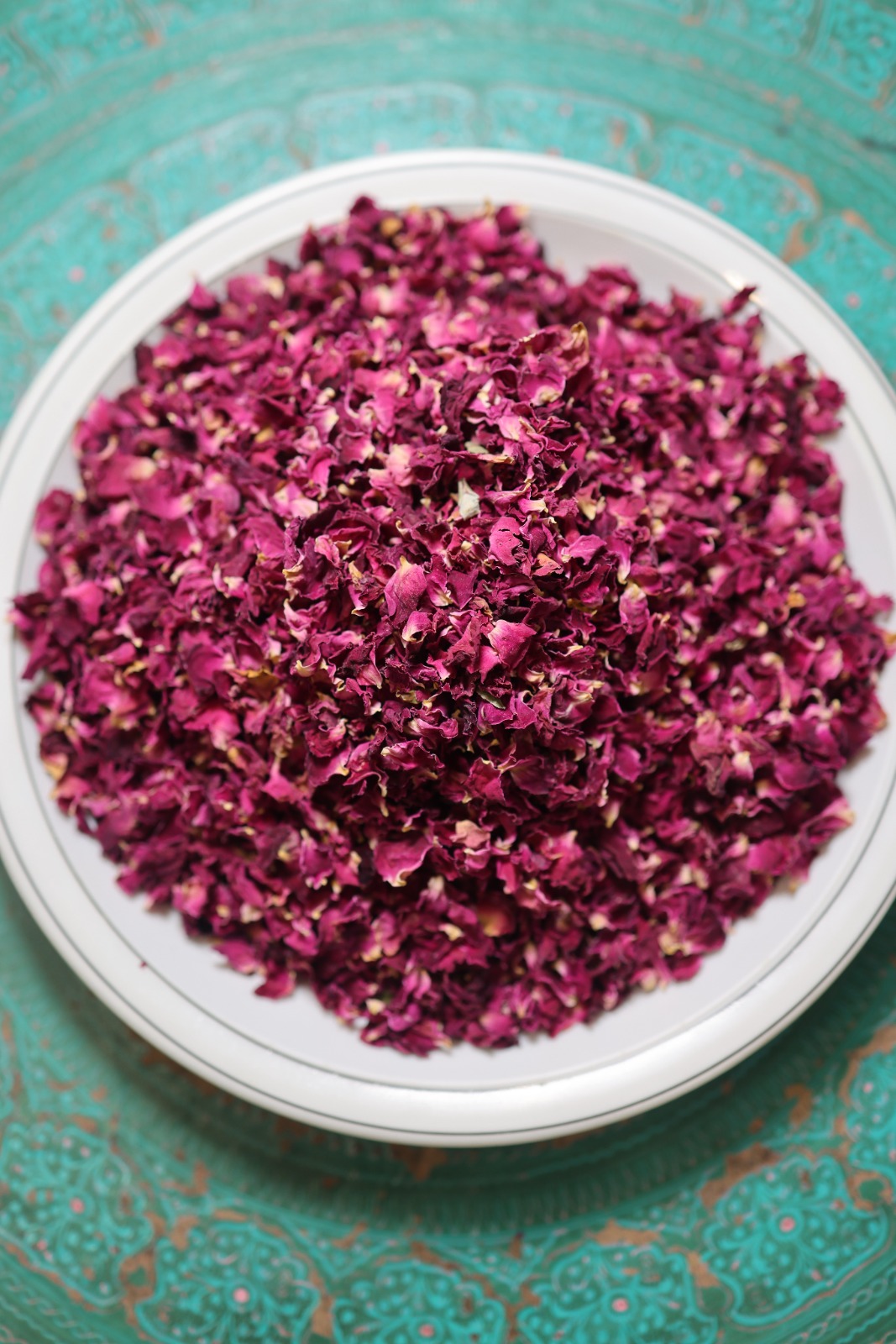
The Turkish Rose Petals Import Market in 2026
Turkey — population ~85 million, the world's 5th-largest confectionery exporter, home to the historic Isparta rose oil industry, and the cultural heart of the global Lokum and Kolonya tradition — is one of the most strategically important commercial markets for dried Rosa damascena. Annual Turkish imports of dried rose petals exceed 1,500 metric tonnes, with Pakistan as a major supply source alongside Iran, Egypt, Morocco, and small-scale Isparta retained product.
Pakistani Rosa damascena is the preferred bulk supply for industrial-scale Turkish lokum (Hacı Bekir, Koska), baklava (Karaköy Güllüoğlu, Gaziantep cluster), kolonya (Eyüp Sabri Tuncer, Pereja), hammam supply distributors, and Turkish cosmetic brands — all of which require consistent food-grade and cosmetic-grade Rosa damascena at competitive bulk pricing that Turkey's premium Isparta production cannot match for industrial-volume applications.
What makes the Turkish market uniquely valuable:
- Lokum (Turkish Delight) — Turkey's iconic UNESCO-recognised heritage confection with massive industrial-scale production. Hacı Bekir (founded 1777 in Istanbul — credited as originator of modern lokum), Koska (1907), Şekerci Cafer Erol, Hafız Mustafa, Mado, and dozens of regional producers create rose lokum (gül lokumu) at scale.
- Baklava — including Gaziantep UNESCO Creative City of Gastronomy — Karaköy Güllüoğlu (1949 Istanbul institution), Hafız Mustafa, Faruk Güllüoğlu, Köşkeroğlu Gaziantep, İmam Çağdaş Gaziantep produce premium baklava with rose syrup variants and rose-petal-garnished SKUs.
- Kolonya (Turkish cologne) — a cultural cornerstone since Ottoman times, splashed on guests' hands at homes, hotels, restaurants, religious gatherings. Eyüp Sabri Tuncer (1923), Pereja, Selin, Onur, Rebul produce rose kolonya (gül kolonyası) at industrial scale.
- Turkish hammam tradition — continuing across Turkey, Balkans, Levant, and global luxury spas — uses dried rose petals in göbektaşı ceremonies, gelin hamamı (bride hammam), and amenity programs at Bodrum, Antalya, Cappadocia, Pamukkale, Istanbul resort hotels.
- Turkey as a re-export hub — Turkish importers re-export rose products (often blended with Isparta rose oil under Turkish premium branding) to GCC markets, EU markets (via Customs Union), and Russia/CIS markets. Inward Processing Regime provides duty relief for re-export-bound shipments.
- Cultural-historic resonance — Turkey's Isparta rose tradition since the 1880s, the Damask rose's deep cultural presence in Ottoman and modern Turkish life, and the cross-cultural Pakistan-Turkey brotherhood relationship all create a uniquely receptive commercial environment for Pakistani rose suppliers.
Top Turkish Applications of Dried Rose Petals
- Lokum (Turkish Delight) — Hacı Bekir, Koska, Şekerci Cafer Erol, Hafız Mustafa, Mado. Premium gül lokumu uses bulk steam-distilled rose water blended into the sugar-starch syrup with whole dried rose petals embedded for visual identity and texture. Industrial production at Hacı Bekir alone supplies Istanbul flagship retail, nationwide distribution, and major export volume to GCC, EU, USA. Demand peaks Ramadan, Şeker Bayramı (Sugar Festival / Eid al-Fitr), tourist season, holiday gift season.
- Baklava — Karaköy Güllüoğlu, Hafız Mustafa, Faruk Güllüoğlu, Köşkeroğlu, İmam Çağdaş Gaziantep cluster. Rose syrup as traditional flavour variant alongside iconic pistachio-pure-syrup recipes. Gaziantep — UNESCO Creative City of Gastronomy — is Turkey's baklava capital, with the highest concentration of baklava manufacturers in Turkey sourcing bulk Pakistani rose water via Mersin port.
- Kolonya (Turkish cologne) — Eyüp Sabri Tuncer (1923 Istanbul), Pereja, Selin, Onur, Rebul. Gül kolonyası (rose cologne) is Turkey's second-most popular traditional kolonya variant after lemon. COVID-19 dramatically expanded global awareness of kolonya as antiseptic-cultural product. Pakistani steam-distilled rose water sourced for industrial kolonya at competitive bulk cost.
- Turkish hammam supply — bath programs at Bodrum, Antalya, Cappadocia, Pamukkale, Istanbul resort hotels. Rose-petal scatter ceremonies on göbektaşı central platforms; gül suyu splash after kese exfoliation; rose-petal olive oil soaps; gelin hamamı (bride hammam) traditional pre-wedding ceremony; Turkish wellness exporters (hammam equipment, towels, soaps, kolonya) frequently include rose petals in product sets.
- Mado, Şekerci Hayri Usta, Mado dondurması — Turkish ice cream traditions. Rose-flavoured Maraş dondurması (Maraş ice cream) and rose-petal garnished premium SKUs.
- Turkish coffee culture — kahve pairing. Traditional Turkish coffee service often includes lokum, rose water mist, or rose-petal cookie pairings. Hospitality industry bulk supply.
- Turkish ma'amoul, kandil simidi, helva — religious/holiday traditional sweets. Kandil nights (Islamic religious commemorations) drive seasonal demand for rose-water-perfumed traditional sweets.
- Cosmetic manufacturers — Komili, Dalan, Eyüp Sabri Tuncer body care line, Selin, plus dozens of regional manufacturers. Rose petal powder (mesh 80-100) in face masks, body powders, soaps, scrubs; rose water (gül suyu) in toners, mists, hair conditioners. Turkish cosmetics export to GCC, EU, Caucasus, CIS.
- Pharmaceutical sector — Turkish OTC herbal formulations. Rose preparations in traditional Turkish herbal medicine continuing Ottoman pharmaceutical tradition.
- Turkish wedding industry (peak May-October). Bride hammam ceremonies (gelin hamamı) traditional pre-wedding ritual; reception decoration with dried rose petals; ceremony scatter; Turkish wedding industry one of region's largest.
- Tourist retail — Grand Bazaar Istanbul, Spice Bazaar (Mısır Çarşısı) Eminönü, Cappadocia tourist circuits. Retail-pack dried rose petals, rose tea blends, rose-petal garnished Turkish delight tourist gifts.
Turkish Customs, TSE Standards & Pakistan-Turkey PTA
Dried rose petals imported into Turkey classify under HS Code 0603.90.00. Turkey is in a Customs Union with the EU (1995, industrial products) but agricultural products have separate framework. Pakistani rose petals enter at MFN rates — typically 0-8% basic customs duty plus 18% KDV (VAT) on CIF value.
The Pakistan-Turkey Preferential Trade Agreement (signed 2022, effective 2023) provides preferential tariff treatment for many Pakistani agricultural commodities including botanical products — confirm current applicable PTA rate with your Turkish customs broker. Some Turkish importers benefit from Inward Processing Regime (Dahilde İşleme Rejimi) for re-export-bound rose products.
Required Turkish documentation:
- Commercial Invoice in English (Turkish translation by importer/broker standard practice)
- Packing List with batch ID, harvest date, lot number, net/gross weight
- Bill of Lading consigned to Turkish importer with vergi numarası (tax number)
- Phytosanitary Certificate from Pakistan's Department of Plant Protection (DPP)
- Certificate of Origin attested by Pakistan Chamber of Commerce (with PTA-claiming Form E where applicable)
- HACCP and ISO 22000 certificates of exporter's processing facility
- HALAL certificate from a recognised Islamic body
- Batch Certificate of Analysis with TSE-compatible parameters
- Turkish Ministry of Agriculture and Forestry pre-control declaration for food/herbal products
- Importer's vergi levhası (tax certificate) and faaliyet belgesi (activity certificate)
Shipping Karachi → Turkey: Mediterranean Routes
Rates indicative 2026, subject to Suez Canal transit fees, fuel surcharge, peak season surcharge. For Istanbul-destined cargo from Mersin: 950 km / 12-14 hour truck or Turkish rail combination, USD 400-600 per 40-ft container. For Gaziantep baklava cluster from Mersin: 200 km / 3-4 hour truck.
Premium Rose Products for Turkish Buyers
- Dried Rose Petals (Food Grade A1) — Rosa damascena hand-selected. For lokum, baklava, hammam, tourist retail. MOQ 100 kg.
- Dried Rose Buds (Gül Goncası) — Whole hand-harvested buds for premium tea, kolonya, Spice Bazaar retail. MOQ 50 kg.
- Rose Petal Powder (Mesh 80, 100) — For Turkish cosmetic manufacturers (Komili, Dalan). MOQ 100 kg.
- Rose Water (Steam-Distilled Bulk Gül Suyu) — For lokum, baklava syrup, kolonya production. 200L drums. MOQ 200 L.
Frequently Asked Questions — Turkish Buyers
FOB Karachi pricing to Turkey?
Grade A1 FOB Karachi: USD 8.50-9.50/kg at 100-499 kg, USD 7.20-8.00/kg at 500-999 kg, USD 6.20-7.00/kg at 10,000 kg+. CIF Mersin adds USD 900-1,200 for 40-ft container. CIF Mersin landed at 500 kg ~USD 8.20-9.40/kg before duties + 18% KDV.
Shipping Karachi to Mersin or Istanbul?
Mersin 12-15 days via Suez. Istanbul Ambarlı 14-17 days. Plus 3-5 days loading + 5-8 days Turkish customs clearance. Total order-to-Istanbul: 25-32 days first order, 20-26 days repeat. Air via IST: 2-3 days for samples.
Which Turkish port should I use?
Mersin (MIP) best for Southern Turkey, Konya, Gaziantep, Kurdistan/Southeast. Istanbul Ambarlı for Istanbul, Bursa, Western Marmara. Izmir (Aliağa) for Aegean/Western Anatolia. Iskenderun for Eastern Mediterranean. Mersin fastest for Anatolian food cargo. Air IST/SAW/ADB for urgent.
Turkish customs documentation required?
Commercial Invoice EN+TR translation by broker, Packing List, BL with vergi numarası, Phytosanitary, CoO Pakistan Chamber (with PTA Form E where applicable), HACCP+ISO 22000, HALAL, batch CoA TSE-compatible, MoAF pre-control, importer vergi levhası + faaliyet belgesi. Duty 0-8% + 18% KDV.
Isparta gülü vs Pakistani Rosa damascena?
Isparta gülü = same Rosa damascena species cultivated in Turkey's Isparta Province since 1880s, world-famous for premium rose oil. Pakistani Rosa damascena is botanically identical species — at 40-55% lower bulk pricing than Isparta retained product. Many Turkish exporters re-export Pakistani petals (rebranded with Isparta-rose marketing) to GCC markets.
Use in Turkish lokum production?
Hacı Bekir (1777 founder of modern lokum), Koska (1907), Şekerci Cafer Erol, Hafız Mustafa, Mado produce gül lokumu using bulk Pakistani rose water in sugar-starch syrup with whole dried petals embedded. Industrial scale. Demand peaks Ramadan, Şeker Bayramı, tourist season, holiday gifts. Mixed container loads (petals + buds + rose water).
Do you supply Karaköy Güllüoğlu and Gaziantep baklava?
Yes. Karaköy Güllüoğlu (1949 Istanbul), Hafız Mustafa, Faruk Güllüoğlu, Köşkeroğlu Gaziantep, İmam Çağdaş Gaziantep — UNESCO Creative City of Gastronomy cluster — source rose water for syrup variants and rose-petal-garnished premium SKUs. Gaziantep highest concentration of baklava manufacturers in Turkey.
Turkish kolonya rose water use?
Kolonya = alcohol-based Turkish cologne cultural cornerstone since Ottoman times. Eyüp Sabri Tuncer (1923 Eyüpsultan Istanbul) largest/most historic. Pereja, Selin, Onur, Rebul produce gül kolonyası rose cologne (second-most popular after lemon). COVID-19 expanded global awareness as antiseptic-cultural product. Pakistani steam-distilled rose water for industrial bulk.
Hammam tradition rose use?
Türk hamamı tradition — across Turkey, Balkans, global luxury spas — uses dried rose petals: göbektaşı ceremonies, gül suyu post-kese splash, rose-petal olive oil soaps, gelin hamamı (bride hammam) pre-wedding ritual scatter. Resort hotels Bodrum, Antalya, Cappadocia, Pamukkale, Istanbul bulk source. Turkish wellness exporters include rose in product sets.
MOQ for first-time Turkish buyers?
100 kg petals, 50 kg buds, 100 kg powder, 200 L rose water standard. First-order trial 50 kg petals or 25 kg buds with prepayment. Free 50-100g samples within 24-48 hours via DHL/FedEx; buyer pays courier (~USD 70-100 to Istanbul/Ankara).
Turkish payment methods?
T/T 30/70, irrevocable L/C at sight from Turkish banks (Garanti BBVA, İş Bankası, Akbank, Ziraat, Yapı Kredi, QNB Finansbank, ING, HSBC Türkiye). 60-90 day open account for established repeat. USD or EUR primary due to TRY volatility. TCMB Reeskont import financing utilizable.
Bulk rose water (gül suyu) in drums?
Yes. 200-L food-safe HDPE drums. MOQ 200 L first order, 1,000 L repeat. USD 3.20-6.20/L. Major Turkish customers: lokum (Hacı Bekir, Koska), baklava (Karaköy Güllüoğlu, Gaziantep), kolonya (Eyüp Sabri Tuncer, Pereja), cosmetics (Komili, Dalan), hammam supply, pharmaceutical.
Turkey EU Customs Union effect?
Industrial products in Customs Union since 1995; agricultural products separate framework. Pakistani rose enters at MFN 0-8% basic + 18% KDV. Pakistan-Turkey PTA (2022/2023) provides preferential treatment for many Pakistani agri commodities. Inward Processing Regime (Dahilde İşleme Rejimi) duty relief for re-export.
Turkish peak demand seasons?
(1) Ramadan + Şeker Bayramı (Sugar Festival = Eid al-Fitr) — massive lokum/baklava production; (2) Kurban Bayramı (Eid al-Adha); (3) Tourist season May-Oct (Istanbul, Cappadocia, Antalya); (4) Winter hammam + kolonya flu-season peak; (5) Wedding May-Oct; (6) Continuous kolonya year-round. Order 6-10 weeks before peaks.
Free sample to Istanbul or Ankara?
Yes. 50-100g sachets or 500 mL rose water free to any Turkish city, 24-48 hour ship. Buyer pays DHL/FedEx (~USD 70-100). For orders over USD 10,000 we absorb sample courier. Multiple grades shippable together.
Pakistani HALAL accepted in Turkey?
Yes. IFANCA, JAKIM, equivalent accepted. Turkey has own GİMDES + HAK (Helal Akreditasyon Kurumu). For Turkish manufacturers exporting to GCC, specific GCC-recognised bodies preferred — accommodated.
Turkish re-export to GCC and EU?
Yes. Turkey is major rose re-export hub. Importers buy Pakistani Rosa damascena, repack into Turkish-branded SKUs (often leveraging Isparta-rose marketing), re-export to GCC, EU (via Customs Union), Russia/CIS. Some blend Pakistani petals with Isparta rose oil for premium 'Turkish rose'. Inward Processing Regime duty relief. Neutral packaging available.
Şam gülü vs Isparta gülü?
Şam gülü = literally 'Damascus rose' = Rosa damascena worldwide. Isparta gülü = the Rosa damascena cultivated in Turkey's Isparta Province since 1880s, famous for premium rose oil. Pakistani Rosa damascena = same species as both. Same botanical lineage, same volatile oil profile. Pakistani bulk pricing significantly lower than Isparta retained product. All originate from historic Damask rose lineage cultivated across Middle East/South Asia for 1,000+ years.
TRY volatility pricing impact?
Significant. USD/EUR invoicing protects against TRY depreciation. PI validity 7-14 days by buyer history. EUR accepted given EU Customs Union status. USD/EUR-income Turkish buyers (cosmetic exporters, lokum/baklava exporters, hammam supply exporters) pay direct hard currency. TCMB Reeskont financing utilizable.
Northern Cyprus + Caucasus via Turkey?
Yes. Mersin → Famagusta ferry to Northern Cyprus TRNC. Trabzon + Sarp border to Georgia + Caucasus. Hopa to Black Sea littoral. Turkish brands serve Turkic diaspora Azerbaijan, Turkmenistan, Uzbekistan, Kazakhstan, Kyrgyzstan via established supply chains.
Export team languages?
English primary. Turkish translation by buyer's broker standard. WhatsApp, email, Telegram, video. Reply under 4 hours. Pakistan-Turkey historical friendship + common Islamic heritage + shared Damask rose tradition make B2B trade culturally smooth. Arabic also handled.
Pakistan-Turkey shipping lines?
MSC, CMA CGM, Maersk, Hapag-Lloyd, Yang Ming, Turkish Arkas + Mediterranean Shipping serve Karachi-Mersin and Karachi-Istanbul regularly. Pakistan-Turkey PTA + growing bilateral trade improved sailing frequency. PIA + Turkish Airlines + Etihad/Qatar for air freight samples.
🇹🇷 Türkiye Cumhuriyeti · Kurutulmuş Gül Yaprakları
Türkiye'ye Kurutulmuş Gül Yaprakları İhracatçısı (Rosa damascena) — İstanbul, Ankara, İzmir, Bursa, Gaziantep
Pakistan'ın gıda kalitesinde kurutulmuş gül yaprakları toptan tedarikçisi — Türk lokum üreticileri (Hacı Bekir, Koska, Şekerci Cafer Erol), baklava evleri (Karaköy Güllüoğlu, Hafız Mustafa, Gaziantep kümesi), Eyüp Sabri Tuncer kolonya üretimi, Türk hamamı tedarik programları ve geleneksel kozmetik üreticileri için. HELAL sertifikalı, TSE uyumlu, HACCP, ISO 22000. Karaçi → Mersin 12–15 gün. Minimum sipariş 100 kg. Türk adreslerine ücretsiz numune.
Türk Kurutulmuş Gül Yaprakları İthalat Pazarı 2026
Türkiye — yaklaşık 85 milyon nüfusla, dünyanın 5'inci en büyük şekerleme ihracatçısı, tarihi Isparta gül yağı endüstrisinin evi ve küresel Lokum ve Kolonya geleneğinin kültürel merkezi — kurutulmuş Rosa damascena için en stratejik açıdan önemli ticari pazarlardan biridir. Yıllık Türk kurutulmuş gül yaprağı ithalatı 1.500 metrik tonu aşmaktadır; Pakistan, İran, Mısır, Fas ve küçük ölçekli Isparta tutulan ürünüyle birlikte başlıca tedarik kaynaklarındandır.
Pakistan Rosa damascena'sı, endüstriyel ölçekte Türk lokumu (Hacı Bekir, Koska), baklava (Karaköy Güllüoğlu, Gaziantep kümesi), kolonya (Eyüp Sabri Tuncer, Pereja), hamam tedarik dağıtıcıları ve Türk kozmetik markaları için tercih edilen toptan tedariktir. Tüm bu üreticiler, Türkiye'nin premium Isparta üretiminin endüstriyel hacim uygulamaları için karşılayamadığı tutarlı gıda ve kozmetik kalitesinde Rosa damascena'ya rekabetçi toptan fiyatla ihtiyaç duyar.
Türkiye'de Kurutulmuş Gül Yapraklarının Başlıca Kullanımları
- Lokum — Hacı Bekir (1777), Koska (1907), Şekerci Cafer Erol, Hafız Mustafa, Mado. Premium gül lokumu üretimi için toplu buharda damıtılmış gül suyu şeker-nişasta şurubuna karıştırılır; tam kurutulmuş gül yaprakları görsel kimlik ve doku için gömülür. Endüstriyel ölçekte üretim. Talep Ramazan, Şeker Bayramı, turist sezonu ve tatil hediye sezonunda zirve yapar.
- Baklava — Karaköy Güllüoğlu (1949 İstanbul kurumu), Hafız Mustafa, Faruk Güllüoğlu, Köşkeroğlu, İmam Çağdaş Gaziantep. Geleneksel fıstık-saf-şurup tarifelerinin yanı sıra gül şurubu geleneksel lezzet seçeneği. Gaziantep — UNESCO Yaratıcı Gastronomi Şehri — Türkiye'nin baklava başkenti, Türkiye'deki en yüksek baklava üreticisi yoğunluğu Mersin limanı üzerinden toplu Pakistan gül suyu tedarik eder.
- Kolonya — Eyüp Sabri Tuncer (1923 Eyüpsultan İstanbul), Pereja, Selin, Onur, Rebul. Osmanlı'dan bu yana Türkiye'nin kültürel köşe taşı. Gül kolonyası limonun ardından en popüler ikinci varyant. COVID-19, kolonyaya antiseptik-kültürel ürün olarak küresel farkındalığı önemli ölçüde artırdı. Endüstriyel kolonya için Pakistan buharda damıtılmış gül suyu tedarik edilir.
- Türk hamamı — Bodrum, Antalya, Kapadokya, Pamukkale, İstanbul resort otelleri. Göbektaşı törenlerinde gül yaprağı serpme; kese sonrası gül suyu; gül yaprağı zeytinyağı sabunları; gelin hamamı geleneksel düğün öncesi ritüeli; Türk wellness ihracatçıları (hamam ekipmanı, havlu, sabun, kolonya) ürün setlerinde gül yapraklarını içerir.
- Kozmetik üreticileri — Komili, Dalan, Eyüp Sabri Tuncer vücut bakım hattı, Selin. Yüz maskelerinde, vücut pudralarında, sabunlarda, scrublarda gül yaprağı pudrası (mesh 80-100); tonik, mist, saç kremlerinde gül suyu. Türk kozmetikleri Körfez, AB, Kafkasya, BDT'ye ihraç eder.
- Düğün endüstrisi (Mayıs-Ekim zirvesi). Gelin hamamı geleneksel düğün öncesi törenleri; kurutulmuş gül yaprakları ile resepsiyon dekorasyonu; tören serpme.
- Turist perakende — Kapalıçarşı İstanbul, Mısır Çarşısı Eminönü, Kapadokya turist devreleri. Perakende paket kurutulmuş gül yaprakları, gül çayı karışımları, gül yaprağı süslenmiş lokum turist hediyeleri.
Article reviewed by Usman Hayat, Export Director, Kohenoor International. Turkish buyer questions: WhatsApp +92 310 4929292 · export@kohenoorint.com