🇩🇪 Germany · Dried Rose Petals · Getrocknete Rosenblätter Großhandel
Dried Rose Petals Exporter to Germany — for Berlin, Munich, Frankfurt, Hamburg & the German Tea, Cosmetic and Bio Markets
Pakistan's bulk supplier of food-grade Rosa damascena dried rose petals to German tea blenders (Teekanne, Meßmer-class manufacturers), natural cosmetics brands (Weleda, Dr. Hauschka, Annemarie Börlind segment), organic Bio-food producers, premium confectionery houses, and herbal medicine formulators. EU MRL compliant, EU 834/2007 organic certification available, HACCP, ISO 22000, HALAL, BioSiegel-eligible. FOB Karachi → Hamburg in 21–25 days. MOQ 100 kg conventional, 500 kg organic.
⚡ Direct Answer · TL;DR
Kohenoor International (Hyderabad, Pakistan) exports food-grade Rosa damascena dried rose petals to German B2B buyers — tea blenders, natural cosmetic brands, organic food manufacturers and herbal medicine producers. FOB Karachi → CIF Hamburg in 21-25 days. Conventional petals EUR 5.80-9.00/kg (EU MRL compliant). EU 834/2007 organic certified petals available at 30-50% premium with 500 kg MOQ. HACCP, ISO 22000, HALAL, BioSiegel-eligible documentation. Free 50-100g samples to German addresses. Contact: WhatsApp +92 310 4929292 · export@kohenoorint.com
Germany · Dried Rose Petals at a Glance
| Product | Rosa damascena food-grade A1 petals · Getrocknete Rosenblätter |
| Origin | Hyderabad, Sindh, Pakistan (Punjab + Sindh rose belt) |
| Destination Ports | Hamburg (primary) · Bremen / Bremerhaven · Rotterdam (for South Germany rail) |
| Sea Transit | 21–25 days Karachi → Hamburg via Suez |
| Air Transit | 4–6 days Karachi → FRA / MUC for samples |
| MOQ Conventional | 100 kg standard · 50 kg first-order trial |
| MOQ Organic (EU Bio) | 500 kg (dedicated processing line) |
| FOB Karachi (500 kg) | EUR 6.80–7.50 / kg conventional · EUR 9.00–11.50 / kg organic |
| CIF Hamburg (500 kg) | EUR 7.60–8.50 / kg conventional · EUR 9.50–12.00 / kg organic |
| EU HS Code | 0603 90 00 (cut flowers dried) |
| EU Tariff (MFN) | Typically 0% for cut dried flowers |
| Compliance | EU MRL (Reg. 396/2005) · EU 834/2007 organic · CHED-D · HACCP · ISO 22000 · HALAL · BioSiegel-eligible |
| Payment | T/T 30/70 · Deutsche Bank / Commerzbank L/C · EUR or USD |
| Languages | English · Deutsch (via partner) |
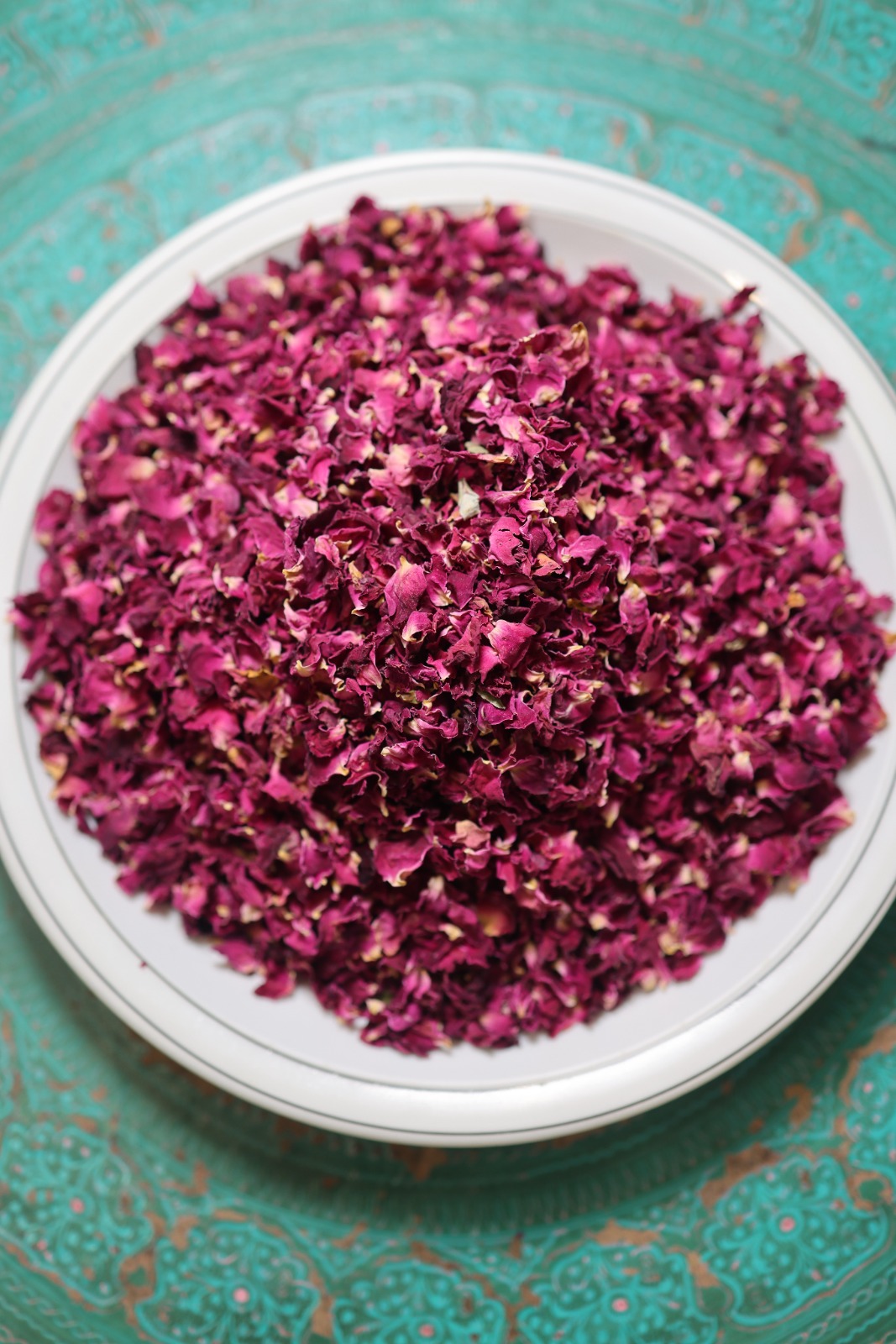
The German Market for Dried Rose Petals in 2026
Germany is one of Europe's largest and most quality-demanding markets for dried botanical ingredients. The German tea industry (Teekanne, Meßmer, Pompadour, Sonnentor, Yogi Tea, Westcliff) consumes thousands of tonnes annually across rose, hibiscus, chamomile, peppermint, lemon balm, and proprietary herbal blends. The German natural cosmetics sector (Naturkosmetik — Weleda, Dr. Hauschka, Annemarie Börlind, Lavera, Speick, Sante, Logona, Alverde, Alterra) is the world's largest, with annual retail of EUR 1.4 billion+ and growing. The German organic food sector (Bio-Lebensmittel) exceeded EUR 17 billion in retail in 2024 — the second-largest organic market in the world behind the United States.
For dried Rosa damascena specifically, the German market splits into four primary buyer segments:
- Premium tea blending — loose-leaf and pyramid sachet brands buying both whole rose buds (Rosenknospen) and tea-grade petals (Rosenblätter). Demand is steady year-round with light spike in Q4 (Christmas tea gift sets).
- Naturkosmetik / natural cosmetics — manufacturers buying rose petal powder (mesh 80-100) for face masks, body powders, soaps, scrubs; and rose water (Rosenwasser) for toners, mists, hair conditioners. BDIH, NaTrue and COSMOS Organic standards apply.
- Bio organic food manufacturing — EU 834/2007 certified Rosa damascena petals for organic confectionery, rose-petal jam (Rosenblütengelee), rose syrup, rose-flavoured ice cream, premium baking inputs, and organic herbal infusions. BioSiegel and EU Bio retail standards.
- Herbal medicine and Apotheke (pharmacy) supply — pharmaceutical-grade rose buds for traditional German herbal medicine (Phytotherapie), Apotheke OTC herbal teas, and dietary supplement formulations.
What distinguishes German buyers from buyers in other EU markets is the depth of technical due diligence: German procurement teams routinely request Certificates of Analysis with EU MRL pesticide residue panels (300+ active substances), microbiological certificates, heavy metals analysis, aflatoxin test results, and — for organic suppliers — EU 834/2007 organic certificates with Transaction Certificates. Kohenoor International provides all of these as standard documentation with every batch shipped to Germany.
German Applications & Buyer Profiles
- Premium tea blending (Loose-Leaf + Pyramid). German tea brands blend whole dried Rosa damascena buds and tea-grade petals into rose-only single-origin teas, rose-and-chamomile blends, rose-hibiscus-rosehip blends, women's-wellness blends, and Christmas gift teas. Bulk quantities 500-5,000 kg per SKU per year, organic premium often preferred.
- Naturkosmetik / Natural cosmetics manufacturing. Weleda, Dr. Hauschka, Annemarie Börlind, Lavera, Speick, Sante and dozens of other German Naturkosmetik brands use rose petal powder (mesh 80-100) in face masks, body powders, soaps, bath products; and rose water (Rosenwasser) as the aqueous-phase carrier for facial toners, mists, hair conditioners, and water-based skincare. NaTrue, COSMOS Organic and BDIH standards apply.
- Bio-Lebensmittel and organic confectionery. German organic food brands (Sonnentor, Vivani, Rapunzel, Naturata, Davert) use EU 834/2007 organic Rosa damascena petals in: rose-petal chocolate inclusions, herbal-rose teas, rose-flavoured biscuits and cakes, rose syrup for organic Limonade and Schorle, rose-petal honey, and rose-petal jam (Rosenblütengelee). BioSiegel-eligible.
- Apotheke (pharmacy) and Phytotherapie. Pharmaceutical-grade rose buds for traditional German herbal medicine, OTC Apotheke herbal teas, and herbal dietary supplement formulations regulated under the German Arzneimittelgesetz (AMG).
- Premium confectionery and baking. Berlin and Munich specialty patisseries, Frankfurt premium confectioneries, and Hamburg gourmet bakeries use food-grade rose petals as visible inclusions in chocolate, premium gulab-style sweets for German-Turkish and German-Arabic markets, and decorative rose-petal cake toppers.
- German wedding industry (Hochzeitsbranche). Confetti-grade biodegradable rose petals (essential for outdoor venue environmental compliance) for ceremonial use, photo confetti, and DIY wedding boxes. Demand peaks May-September.
- German-Turkish and German-Arabic food sector. Berlin, Hamburg, and Cologne have substantial Turkish and Middle Eastern food manufacturing communities producing baklava, künefe, Turkish delight (Lokum), gulkand, rose-flavoured sweets — all sourcing bulk Rosa damascena.
- Herbal spa and wellness amenities. Premium German spa chains (Liebenzell, Baden-Baden Thermen) and luxury hotel groups source bulk dried rose petals for bath ceremonies, hammam treatments, and amenity programs.
EU Food Law, MRL Compliance & Organic Certification
German imports of dried Rosa damascena petals are governed by EU food law applied at the national level by:
- DG SANTE (EU Directorate-General for Health and Food Safety) — EU-wide food import oversight
- BVL (Bundesamt für Verbraucherschutz und Lebensmittelsicherheit) — German federal food safety inspection
- BfR (Bundesinstitut für Risikobewertung) — German federal risk assessment authority
- Zoll — German customs administration, processes imports via ATLAS electronic system
Required compliance and documentation:
- EU MRL compliance per Regulation (EC) 396/2005 — pesticide residue limits. For dried herbal flowers including Rosa damascena, MRLs are typically at the limit of determination (0.01 mg/kg)
- EU CHED-D (Common Health Entry Document — Plant Products) submitted via TRACES NT system 48 hours before vessel arrival at Hamburg
- Phytosanitary Certificate from Pakistan's Department of Plant Protection
- Commercial Invoice in English (or German on request)
- Packing List with batch ID, harvest date, lot number, net/gross weights
- Bill of Lading consigned to the German importer with valid EORI number
- Certificate of Origin from Pakistan Chamber of Commerce
- HACCP and ISO 22000 certificates of Kohenoor International processing facility
- HALAL certificate if relevant to end customer
- Batch Certificate of Analysis (CoA) with EU MRL pesticide panel, heavy metals (Pb, Cd, As, Hg), microbiology (total plate count, salmonella, E. coli, mould), aflatoxins, moisture, foreign matter
- For EU 834/2007 organic shipments: Organic Certificate from accredited body (EcoCert, Control Union, CCPB, Bio Suisse, Naturland), Transaction Certificate per shipment, and chain-of-custody documentation
Shipping Karachi → Germany: Routes & Costs
Premium Rose Products for German Buyers
- Dried Rose Petals (Food Grade A1 / Bio Organic) — Rosa damascena, hand-selected. Tea grade, food grade, cosmetic grade. MOQ 100 kg conventional / 500 kg organic.
- Dried Rose Buds (Rosenknospen) — Whole hand-harvested buds 1.5–3.5 cm. Premium tea + perfumery + decorative. MOQ 50 kg.
- Rose Petal Powder (Rosenblütenpulver Mesh 80, 100) — Vacuum-sealed cosmetic + food grade. Naturkosmetik-compatible. MOQ 100 kg.
- Rose Water (Rosenwasser / Rosenhydrolat) — Steam-distilled pure Rosa damascena hydrosol. Naturkosmetik standard. 1L glass / 5L / 25L / 200L drums. MOQ 200 L.
Frequently Asked Questions — German Buyers
What is the FOB Karachi price for dried rose petals delivered to Germany?
FOB Karachi Grade A1 conventional: EUR 6.80-7.50/kg at 500-999 kg, EUR 5.80-6.60/kg at 10,000 kg+. EU organic 30-50% premium. CIF Hamburg landed at 500 kg first order ~EUR 7.60-8.50/kg conventional, EUR 9.50-12.00/kg organic.
How long does shipping from Karachi to Hamburg take?
Sea: 21-25 days transit via Suez + 3-5 days loading + 1-3 days EU customs/BVL. Total order-to-warehouse: 30-40 days first order, 25-32 days repeat. Air to FRA/MUC: 4-6 days samples.
Are organic (EU 834/2007 Bio) petals available?
Yes, on contract. MOQ 500 kg (dedicated processing line). 30-50% premium over conventional. EU organic certificate from EcoCert/Control Union/CCPB plus Transaction Certificate per shipment. BioSiegel-eligible.
What are EU MRL pesticide limits for dried rose petals?
EU 396/2005 — for dried botanicals (category 0100000), MRLs typically at limit of determination 0.01 mg/kg. Every shipment ships with batch CoA showing full EU MRL panel (300+ substances) tested by accredited Pakistani lab with optional retest at EU labs.
Do you supply Teekanne, Meßmer, Weleda, Dr. Hauschka and other major German brands?
Client confidentiality prevents naming specific accounts, but our Pakistani Rosa damascena is sourced by German tea blenders, Naturkosmetik manufacturers, Bio-food brands, and premium confectionery houses in the segments these brands occupy.
What customs documents are required?
Commercial Invoice, Packing List, BL, Phytosanitary, Certificate of Origin, EU CHED-D (TRACES NT), HACCP+ISO 22000, HALAL if relevant, batch CoA with EU MRL panel + heavy metals + microbiology + aflatoxins, EU organic certificate + Transaction Certificate (for Bio), importer's EORI. Customs via ATLAS.
Which German port should I use?
Hamburg for 80% of imports — fastest customs, largest food infrastructure. Bremen/Bremerhaven for northern Germany. Rotterdam + rail for southern (München, Stuttgart) buyers. Air via FRA/MUC for under 100 kg urgent.
Bio (EU organic) market demand in Germany?
Germany has EU's largest Bio market (EUR 17B+ retail, 8-12% annual growth). Strong demand for organic Rosa damascena from Naturkosmetik, Bio-tea, organic confectionery, herbal medicine. We supply EU 834/2007 organic certified to multiple German buyers in these segments.
Do you supply Rosenwasser (rose water) to German cosmetic makers?
Yes. Pure Rosa damascena hydrosol — no preservatives, no alcohol, no synthetic fragrance. Naturkosmetik standard (BDIH, NaTrue, COSMOS Organic). 200-litre HDPE drums. MOQ 200 L first order, 1,000 L repeat. EUR 3.20-6.00/L.
Rosenknospen (buds) vs Rosenblätter (petals) — what's the difference?
Buds: whole 1.5-3.5cm, for premium loose-leaf tea, herbal medicine, decorative. Petals: loose, for bulk tea, cosmetic powder, baking, processing. Buds carry 35-50% premium. Typical German tea blender procurement: 70-80% petals + 20-30% buds.
How does German LMIV food labelling law apply?
EU 1169/2011 (LMIV). Required: ingredient list (Getrocknete Rosenblätter / Rosa damascena), origin (Pakistan), batch lot, best-before, storage conditions, importer's name + EU address, organic info if applicable. Our bulk packaging carries Pakistan-side labelling adequate for German B2B; importer over-labels or repackages for retail.
Do you accept payment in Euros?
Yes. Invoices in EUR at day's exchange rate, PI valid 14 days. T/T 30% advance + 70% against shipping docs, or 100% irrevocable L/C at sight from German bank (Deutsche, Commerzbank, BayernLB, HypoVereinsbank, Sparkasse). 60-day open account negotiable for established repeat customers.
Are petals tested for heavy metals and microbiology to EU standards?
Yes. Batch CoA includes: EU MRL pesticide panel, heavy metals (Pb, Cd, As, Hg per EC 1881/2006), total plate count, salmonella, E. coli, mould, aflatoxins, moisture, foreign matter. Accredited Pakistani lab (PCSIR, SGS Pakistan) with optional retest at Eurofins/SGS/Intertek Germany.
Can samples be tested in Germany before bulk PO?
Yes, recommended. 50-100g free sample shipped to your German address (DHL/FedEx, you pay ~EUR 70-90 courier). Send to Eurofins/SGS/Intertek Germany — 5-7 business day turnaround. Upon approval, bulk PO issued, 14-21 day production.
Private-label / own-brand retail packaging available?
Yes. From 500 kg per SKU. Options: kraft bags 50g-1kg with LMIV-compliant German labels, glass jars 50-250g, biodegradable resealable pouches, HoReCa pillow packs. Lead time 21-28 days first order, 14-21 days repeat.
Pakistani vs Bulgarian vs Iranian Rosa damascena?
Bulgarian (Rosenfelder von Bulgarien): top reputation for premium attar/perfumery, EUR 12-18/kg German wholesale. Iranian (Kashan): highest essential oil but EU sanctions banking complications. Pakistani: comparable food-grade quality, HACCP+ISO compliant, EUR 5.80-7.50/kg German wholesale — standard for bulk tea, organic food, cosmetic ingredient at scale.
German wedding industry use of rose petals?
Confetti-grade biodegradable petals (essential for outdoor venue environmental rules) for ceremonial entrance, photo confetti, table decoration. Peak May-September. 5-50 kg per planner per event; bulk 100-500 kg/Q to event design houses. Mixed-colour 50g/100g/250g sachets available for DIY market.
Suitable for German Bio-confectionery and Bio-bakery?
Yes with EU 834/2007 organic. German Bio-brands (Sonnentor, Vivani, Rapunzel, Naturata, Davert) use organic Rosa damascena in chocolate inclusions, herbal-rose tea, biscuits, rose syrup, rose-petal jam, organic Limonade. BioSiegel + EU Bio retail compliant.
What languages does your export team operate in?
English primary; German correspondence via translation partner for procurement managers preferring German documentation. WhatsApp, email, Teams, Zoom. Reply under 4 hours business hours. PI and CoA in English (standard) and German (on request, 24h turnaround).
Austria + Switzerland buyers — direct or via Germany?
Both. Austrian: Trieste + rail or Hamburg + transit through Germany (EU single market). Swiss: Basel rail from Hamburg/Rotterdam, or Genoa. Same specs, EU MRL, optional organic. Pre-prepared docs for each customs regime.
How can I verify Kohenoor International before first order?
Multiple paths: (1) dryrose.org + kohenoorint.com + YouTube + LinkedIn + Alibaba TrustPass; (2) request HACCP/ISO 22000/HALAL certs; (3) bank reference from our PK correspondent; (4) 2-3 EU buyer references (NDA); (5) facility visit to Hyderabad (we cover hotel; you cover flights); (6) third-party pre-shipment inspection (BV/SGS/Intertek Pakistan).
Shelf life of dried rose petals shipped to Germany?
24 months properly packed. Our food-safe multi-wall kraft bags with PE liner protect during 21-25 day transit and subsequent shelf life. Storage: 18-25°C, RH below 60%, away from sunlight, sealed. Full storage guide: dryrose.org/blog/dried-rose-petals-shelf-life-storage-best-practices
Article reviewed by Usman Hayat, Export Director, Kohenoor International. German buyer questions: WhatsApp +92 310 4929292 · export@kohenoorint.com · Deutsche Korrespondenz auf Anfrage.