Every batch of dried botanicals we export passes through both our in-house quality lab in Hyderabad, Pakistan and — at buyer request — independent third-party testing by SGS, Eurofins, or Bureau Veritas. This page details the parameters we test, the equipment we use, and the documentation you receive.
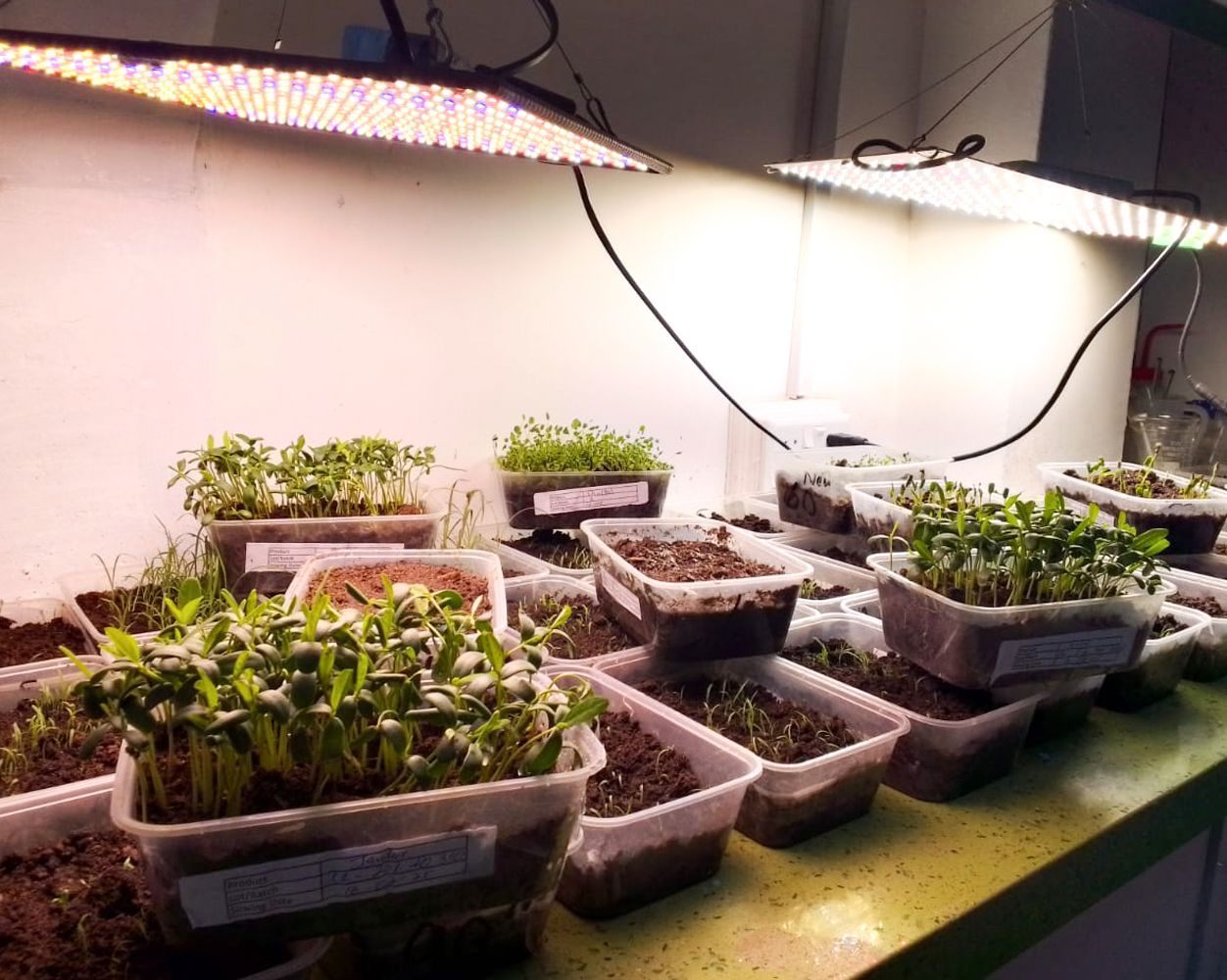
In-House Lab — Daily Routine Testing
Our quality control lab operates inside our Hyderabad processing facility. Every incoming raw-material lot and every outgoing export batch is tested for these parameters before release:
Physical Parameters
- Moisture Content — Moisture analyzer (halogen, OHAUS MB120) — target ≤ 10% for dried petals, ≤ 8% for powder. Critical for shelf life and microbial growth.
- Color & Appearance — Visual inspection under standardized D65 daylight; reference color cards for grading (Premium / Grade A / Grade B / Tea Grade).
- Foreign Matter — Manual sorting, magnetic separator passes; target < 0.1% by weight.
- Mesh Distribution (for powders) — Tyler / ASTM sieve stack 30 / 50 / 80 / 100 mesh; report particle-size distribution.
- Bulk Density — Tap density meter; for shipping/packaging optimization.
Microbiological Parameters
- Total Plate Count (TPC) — Compendial method; target < 10⁵ CFU/g (food grade), < 10³ CFU/g (cosmetic grade after steam sterilization).
- Yeast & Mold — Sabouraud Dextrose Agar incubation; target < 10² CFU/g.
- E. coli — MPN method; target absent in 1 g.
- Salmonella — Selective enrichment; target absent in 25 g.
- Coliforms — Target < 10 CFU/g for food-grade lots.
Microbiological testing is partnered with NUST Lahore Labs for confirmatory testing on every export-bound batch.
Chemical Parameters
- Ash Content — Furnace at 550 °C; total ash < 8%, acid-insoluble < 2%.
- Volatile Oil (rose buds & petals) — Clevenger-type distillation; reports oil yield % by weight (typical 0.03–0.08% for dried Rosa damascena).
- pH (rose water) — Calibrated pH meter; spec 5.5 ± 0.5.
- Specific Gravity (rose water) — Pyknometer; spec 0.995–1.005 at 20 °C.
Third-Party Lab Partners (Buyer Request)
For buyers needing accredited certification, we routinely commission third-party testing at:
- SGS Pakistan — Karachi laboratory; ISO/IEC 17025 accredited. Pesticide residues, heavy metals, aflatoxins, irradiation.
- Eurofins Pakistan — Lahore; full residue panel (200+ pesticides) per EU 396/2005.
- Bureau Veritas — Pre-shipment inspection & loading supervision.
- Intertek — Allergen testing, GMO testing.
Standard Certificate of Analysis (CoA) Issued
Every shipment is accompanied by a CoA documenting:
- Product name, botanical name (Rosa damascena), origin, batch number, harvest date
- Moisture, ash, volatile oil (where applicable)
- Total Plate Count, Yeast & Mold, E. coli, Salmonella results
- Heavy metals: Lead, Cadmium, Mercury, Arsenic (mg/kg)
- Pesticide residue summary — pass / fail against EU MRL list
- Net weight, packing units, declared shelf life
- Lab signature, date, retention sample reference
Heavy Metal Limits We Comply With
| Metal | EU limit (food) | Our typical result |
|---|---|---|
| Lead (Pb) | ≤ 3.0 mg/kg | < 0.5 mg/kg |
| Cadmium (Cd) | ≤ 1.0 mg/kg | < 0.2 mg/kg |
| Mercury (Hg) | ≤ 0.1 mg/kg | < 0.03 mg/kg |
| Arsenic (As) | ≤ 1.0 mg/kg | < 0.3 mg/kg |
Retention Samples
We retain a 250 g sealed retention sample from every export batch for a minimum of 24 months. In the event of a buyer complaint or regulatory query, the retention sample is the official reference for re-testing.
Certifications & Compliance
Our facility holds: HACCP, ISO 22000:2018, Halal (SGS Pakistan), Pakistan Food Authority license, and Department of Plant Protection registration for phytosanitary issuance. See full certificate gallery.
Need a custom test panel? Discuss your QC requirements with our lab team